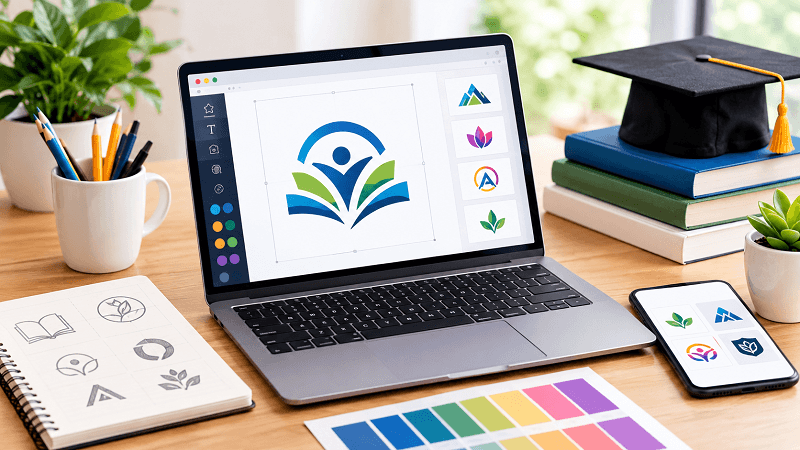
Building an online business or educational brand requires careful planning, effective marketing, and a recognizable visual identity. A professional logo helps people identify a business and remember its name. For entrepreneurs working with a limited budget, a logo maker offers a convenient way to create a customized design without advanced graphic design skills.
However, successful digital branding involves more than following popular trends. Businesses should research their target audience, understand their industry, and choose designs that reflect their actual goals.
What Is a Logo Maker?
A logo maker is an online tool that helps users design logos using customizable templates, fonts, colors, icons, and shapes. Some platforms also use artificial intelligence to suggest designs based on a business name, industry, and preferred style.
These tools are suitable for startups, freelancers, online stores, educational websites, and content creators. Depending on the platform, users can create logos for websites, social media profiles, business cards, and marketing materials.
Benefits of Using a Logo Maker
Creating a logo independently offers several advantages for new businesses.
- Affordable branding: Many tools provide free design options or reasonably priced packages.
- Easy customization: Users can experiment with different colors, fonts, and layouts.
- Time savings: Ready-made templates simplify the initial design process.
- Consistent identity: A well-planned logo helps businesses maintain a recognizable appearance across digital platforms.
Although these tools make logo creation easier, users should carefully review their designs to ensure they look professional and suit their intended audience.
How to Create an Effective Logo
Creating a memorable logo requires a clear strategy rather than random design choices.
1. Research your audience: Understand your customers, competitors, and industry before choosing a design. This helps you develop a visual identity that fits your business.
2. Choose a suitable style: Select a wordmark, symbol, or combination logo that communicates your brand’s purpose. Educational businesses may benefit from simple, friendly designs, while technology companies might prefer a modern appearance.
3. Select appropriate colors and fonts: Use a limited color palette and readable typography. Your choices should reflect your brand personality and remain clear on smaller screens.
4. Keep the design simple: Avoid unnecessary graphics and excessive decorative elements. Simple logos are generally easier to recognize and reproduce across different platforms.
5. Test your logo: Preview the design on your website, mobile devices, and social media profiles. Make sure it remains readable at different sizes.
6. Check file formats and licensing: Download suitable files, such as PNG or SVG when available. Review commercial usage rights and confirm whether the design can be used for your intended business purposes.
Using a Logo Maker for Educational Brands
Educational websites, online courses, and tutoring services need branding that communicates clarity and trust. A carefully designed logo can help distinguish an educational platform from competing services.
For example, a children’s learning website might use approachable typography and friendly visual elements, while a professional training platform could choose a clean and minimal design.
The logo should also match the website’s colors, content, and overall presentation. Consistent branding across course materials, newsletters, and social media profiles helps create a unified identity.
Common Mistakes to Avoid
One common mistake is copying trending designs without considering the brand’s long-term objectives. Trends change, but a business needs an identity that remains relevant as it grows.
Other mistakes include using too many colors, choosing unreadable fonts, copying competitors, and ignoring licensing restrictions. Entrepreneurs should also remember that a logo alone cannot guarantee business success. Quality products, useful content, customer service, and effective marketing remain essential.
Conclusion
A logo maker provides entrepreneurs with a practical starting point for developing a recognizable online identity. By researching their audience, selecting appropriate design elements, and maintaining consistency across digital platforms, businesses can create branding that supports their long-term objectives.
Rather than simply following online trends, focus on originality, clarity, and your audience’s needs. A thoughtful logo, combined with a well-planned digital strategy, can help establish a stronger foundation for an online business or educational brand.